Now consider a person choosing to participate on social media platforms and creating individualized content, while every company is different, take for example Tumblr.
In 2014 Tumblr changed their user rights and agreements and there was an uproar of people terrified that Tumblr was trying to steal user ideas, in fact that was not the case. People misinterpreted and created a mass hysteria, but this was not the company’s intent.
The company has stated in their terms and agreements to protect the user’s rights to intellectual property that subscribers retain ownership in intellectual property as well as any other applicable rights. (Romano, 2014)
In the end the whole situation demonstrates the fear that comes along with people creating their own content and the alarm that someone will copy this without warning. But this is the reason there are laws in place to protect people in their right for creative expression and their ownership over said ideas.
This link goes further in to detail about what exactly happened to create this mass panic for intellectual property rights on Tumblr in 2014.http://www.dailydot.com/business/tumblr-new-tos-users-freak-out/
Similarly, last year Snapchat updated their privacy policy and left people outraged as well as terrified. Snapchat’s whole premise is to send photos to one another with pictures that are deleted after maximum 10 seconds and cannot be re-viewed. But in the new Terms of Service Snapchat has stated they are allowed to review, distribute, and store users’ pictures. Similarly to Tumblr, the company was mainly trying to protect themselves, though for snapchat it had more to do with the ability to share live stories world-wide. (French, 2015)
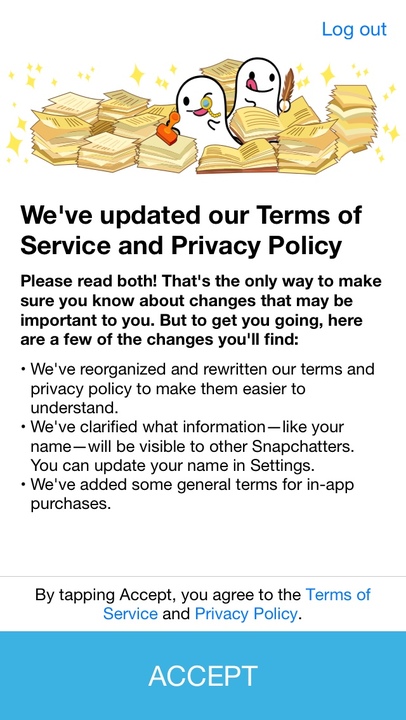
There is more information in this link that explains further in detail the timeline as to what happened.http://www.marketwatch.com/story/snapchats-new-scary-privacy-policy-has-left-users-outraged-2015-10-29
In conclusion both situation showcase peoples fear of the possibility of individual content be reproduced. It indicates why these policies are so vital when it comes to not only companies trying to protect their own image, but the average person’s online presence.
By: Christina Bulic, 2016
References:
French, S. (2015, November 02). Snapchat’s new ‘scary’ privacy policy has left users outraged.
Retrieved from http://www.marketwatch.com/story/snapchats-new-scary-privacy-policy-has-left-users-outraged-2015-10-29
Romano, A. (2014, January 28). Tumblr changed its TOS, and everyone is freaking out.
Retrieved from http://www.dailydot.com/business/tumblr-new-tos-users-freak-out/
 Issues in Social Media
Yup, I remember this, I have an article here that explains how Snapchat does not fully delete your “private” photos. A man was able to save photos onto the library of his phone, which yes destroyed the whole premise of snapchat’s 10 seconds max photo viewer. take a look
LikeLike
I find it extremely interesting how a social media platform or company can simply change their intellectual property policies to pretty much whatever they want. I am very curious the process they have to go through in order to change a policy. I do recall the Tumblr outbreak. At least users have to be notified but in those cases the users almost don’t have a voice. I looked up ways to protect yourself in these cases and came across this article:
https://www.echosec.net/5-ways-to-protect-your-intellectual-property-on-social-media/
LikeLike
http://www.businessinsider.com/snapchat-doesnt-delete-your-private-pictures-2013-5
LikeLike