What is Copyright and Intellectual Property?

Introduction:

Imagine having idea for a business and just beginning to start out, working hard, going to events and fairs, creating an online presence by marketing on social media. Just beginning to move product out and there is a buzz surrounding your product you worked really hard to create.

One day you wake up and find a big company has copied your innovative idea, while being first to market is a benefit. But if you don’t play your cards right it may result in many copy-cat companies. It is important to know your rights to intellectual property, and what routes to go about in protecting such as patents and copyrights.


This link is to an interesting blog post about 5 famous copyright infringement cases, and the lessons learned from them:https://99designs.ca/blog/tips/5-famous-copyright-infringement-cases/
 1intellectualproperty

What is copyright and intellectual property?

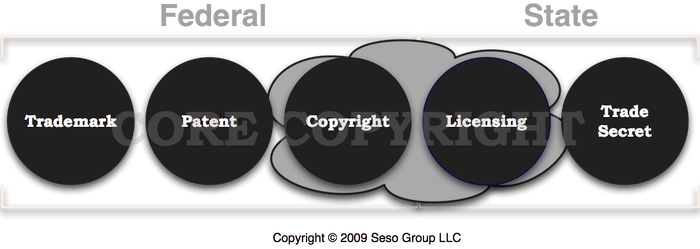
Before delving into a discussion about social media in copyright and intellectual property in 2025, it is important to note there is a difference between copyright vs intellectual property. Think of intellectual property as an umbrella that over sees various divisions of human creativity and the rights that pertain to this. There are a several legal regimes that fall under intellectual property laws, these include:

“copyright, trademark, and patent law fall under the umbrella of intellectual property, mostly decided under federal law. As a general premise, I usually add licensing law and trade secret law under the intellectual property umbrella. Licenses and trade secrets are decided under state law.” (“The Difference Between Copyright & Intellectual Property”, 2010)

This link goes on to explain the difference between copyright & intellectual property with an interesting anecdote about a copyright lawyer:https://corecopyright.org/2009/12/03/copyright_ip/


By: Christina Bulic, 2016

References:

Ellison, K. (2012). 5 famous copyright infringement cases (what you can learn). Retrieved

           from https://99designs.ca/blog/tips/5-famous-copyright-infringement-cases/

The Difference Between Copyright & Intellectual Property. (2010). Retrieved from
The Difference Between Copyright & Intellectual Property

What type of social media platforms contain Intellectual Property policies?

Now consider a person choosing to participate on social media platforms and creating individualized content, while every company is different, take for example Tumblr.

In 2014 Tumblr changed their user rights and agreements and there was an uproar of people terrified that Tumblr was trying to steal user ideas, in fact that was not the case. People misinterpreted and created a mass hysteria, but this was not the company’s intent.

The company has stated in their terms and agreements to protect the user’s rights to intellectual property that subscribers retain ownership in intellectual property as well as any other applicable rights. (Romano, 2014)

In the end the whole situation demonstrates the fear that comes along with people creating their own content and the alarm that someone will copy this without warning. But this is the reason there are laws in place to protect people in their right for creative expression and their ownership over said ideas.

This link goes further in to detail about what exactly happened to create this mass panic for intellectual property rights on Tumblr in 2014.http://www.dailydot.com/business/tumblr-new-tos-users-freak-out/


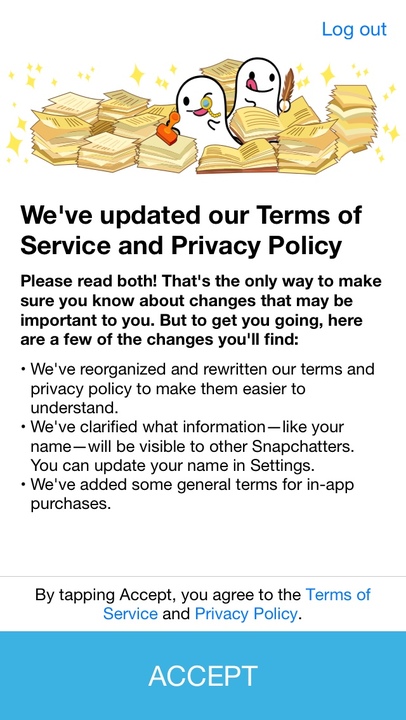
Similarly, last year Snapchat updated their privacy policy and left people outraged as well as terrified. Snapchat’s whole premise is to send photos to one another with pictures that are deleted after maximum 10 seconds and cannot be re-viewed. But in the new Terms of Service Snapchat has stated they are allowed to review, distribute, and store users’ pictures. Similarly to Tumblr, the company was mainly trying to protect themselves, though for snapchat it had more to do with the ability to share live stories world-wide. (French, 2015)

MW-DY138_snapch_20151029191902_NS.jpg

There is more information in this link that explains further in detail the timeline as to what happened.http://www.marketwatch.com/story/snapchats-new-scary-privacy-policy-has-left-users-outraged-2015-10-29


In conclusion both situation showcase peoples fear of the possibility of individual content be reproduced. It indicates why these policies are so vital when it comes to not only companies trying to protect their own image, but the average person’s online presence.


By: Christina Bulic, 2016

References:

French, S. (2015, November 02). Snapchat’s new ‘scary’ privacy policy has left users outraged.

Retrieved from http://www.marketwatch.com/story/snapchats-new-scary-privacy-policy-has-left-users-outraged-2015-10-29

Romano, A. (2014, January 28). Tumblr changed its TOS, and everyone is freaking out.

Retrieved from http://www.dailydot.com/business/tumblr-new-tos-users-freak-out/

Who are intellectual property laws protecting?

Why do companies have them in place? Who is it really protecting?

The intellectual property laws and all that falls under it is protecting both the average person and businesses, just in different contexts. Take for example a company or business just starting out, they should take these laws very seriously and consider the following as important information that could protect their rights:

“Establishing intellectual property protection for your goods, services or brand names is important for a variety of reasons. Intellectual property can:

  • Establish a right to, and ownership of, your intellectual creations so you can profit from them
  • Prevent competitors from copying or closely imitating your products or services
  • Protect the distinct identity, image, and reputation of your business
  • Build customer trust and loyalty by establishing a unique brand name or image” (“Copyright – Canada Business Network”)

This is a very good website for more information, it is dependable as it is run by the government of Canada, as well as all information is relevant and pertains to Canada:  http://www.canadabusiness.ca/government/copyright-and-intellectual-property/what-is-intellectual-property/


These intellectual property laws also protect the regular person choosing to participate in online activity. Because of certain websites ability to be a content creator, there is always a fear of other people stealing your work without recognition. That is why most websites have policies, regulations and punishments within their company.

The attached video is interesting in there explanations as to what intellectual property is. It also brings up the interesting question of whether it is foolish that we need to choose between devaluing intellectual talent and labour, or devaluing the network system we have today. Questioning what the future for these intellectual property laws will be with all the furthering technology.


By: Christina Bulic, 2016

References:

Introduction To I.P (2015). (Video) Retrieved from

https://www.youtube.com/watch? lc=z12stpqgvkb2u33zn04cdfowhvjajlaicjo&v=RQOJgEA5e1k 

What is intellectual property? – Canada Business Network. (n.d.). Retrieved from

http://www.canadabusiness.ca/government/copyright-and-intellectual-               property/what-is-intellectual-property/

Trademarks, patents, copyright?

Trademarks are very distinguishing marks such as words, symbols or designs that are intended to individualize a company. It is for this reason important to protect a company’s livelihood, their image, and name. If companies could borrow from each others competitors, it would take the novelty out, and the reason why some companies are special. (“Trademark – Canada Business Network”) In Canada, businesses have to go through an application process to file for a trademark, this link should open one of five applications in the stages of applying in Canada: ..\applicationrregistrationtrademarkcanada_e.doc


Patents are law protecting human innovation, projects and individual ideas. A person may come up with an innovation and with the fear of other companies stealing, copying and distributing the idea without giving credit. This is the reason people create patents, you also may find the idea was already patented. In Canada there is an application process accessible to all, keeping in mind there is specifically Canadian, as well as international patent applications. (“Patent – Canada Business Network”) By following this link for a Canadian application on the Government of Canada website, there is useful information, as well as a place to upload your application electronically: http://www.ic.gc.ca/eic/site/cipointernet-internetopic.nsf/eng/wr01477.html?Open&wt_src=cipo-patent-main


Copyright laws pertain, but not limited to, original literary (includes software), dramatic, and musical creations not to be copied, or distributed. There is a process in Canada as well as in other countries to protect people with a creative vision by law with an application process.(“Copyright – Canada Business Network.”)The following link provides possible services for Canadians who wish to participate on the Canadian Government website: http://www.ic.gc.ca/eic/site/cipointernet-internetopic.nsf/eng/wr03915.html?Open&wt_src=cipo-cpyrght-main&wt_cxt=toptask

By: Christina Bulic, 2016


References

Trademark – Canada Business Network. (n.d.). Retrieved from

http://www.canadabusiness.ca/government/copyright-and-intellectual-           property/trademark/

Patent – Canada Business Network. (n.d.). Retrieved from

http://www.canadabusiness.ca/programs/patent-1/

Twitter and their copyright policy

In my part of the subtopic, I have talked about the websites that I trust and feel safe on. A social media website that I have been a user for years on is Twitter. Twitter is an online news and social networking service where users post and read short 140-character messages called “tweets”. Registered users can post and read tweets, but those who are unregistered can only read them, and not post. 2016 Twitter, Inc. In the article that I am about to discuss, I felt confident reading about it, because the Twitter team talked about how they feel their users need to feel safe in order to fully express themselves. In essence, they want users to know that what they write will not be violated, and that it is their personal space to write what they want, © 2016 Twitter, Inc. I do feel Twitter has copyright claims informed by the team, that claims, if a person, business or whoever has created content, and infringes on copyrighting the material that they tweet about, you can be reported, and even charged, since Twitter is widely focused on providing news for the public, and some of it can be vital information.

Overall I think the changes in social media policies in current times, may have made an impact on the overall experience of using these sites, compared to the past. Some companies have mislead people to believing their website were secure and safe, while other sites, actually take action and force their ability to ensure safety is provided for users using their site. I think people breach copyright material because they lack the creativity to come up with their own, hence referring back to intellectual property, and the creators of these sites. We have to be extremely careful even ourselves with copyright material, because I feel over the next ten years by 2025, people are only going to become more famous, and grow their themselves into an empire from certain social media websites, and we as users have to be cautious of what we put out, and where it came from.

By: Michael Tomczak, 2016

Instagram Privacy Policy changes:

With the new privacy policy in 2016, Instagram has made tons of changes. One thing is the find friend update. Instagram now, has allowed users to actually go into the contact list of your phone, and find friends who have Instagram from your contact list. This is only available, provided that the user has put their mobile number into their biography or settings of Instagram. I still think this is a great feature that allows people to connect with more users from Instagram. Instagram also has an age policy. Anybody under the age of thirteen is not allowed to have an active profile. In the event that Instagram finds an underage user, they will quickly delete their information as soon as possible. This is to prevent any harm to that young individual from predators, or inappropriate content that is not suitable for their age. © 2016 INSTAGRAM child protection policy. I feel that is a way that Instagram shows its protection, and safety towards young users.

Another new and convenient tool for all users, is that now, they have the ability to update information at any time. This was not the case when Instagram first launched, so it’s new policy has defiantly left their users very pleased with this new update. Another thing Instagram is very good, and known for, is the ability to delete your account in an easy and quick manner. Instagram unlike other social media websites, actually allows you to easily delete your account, if you are not feeling the website anymore, with no hassle at all. Most social media websites, at least some that I have used, have been very difficult to delete a profile. That right there for me is a red flag, that the website is a scam. If I can have the ability to delete my account without any hassle, then I can safely say that I trust that social media website, because that means that they are not asking anything from you in return, from choosing to leave their website. I think that over the past decade, we have all seen the growth and development of social media sites, and their polices. A lot of these companies have claimed to make changes, which has mislead people to thinking it was to improve their website for all users. In reality, the polices were to enhance the amount of users who will go on their website on a daily basis, or create ads, that lead to other websites, that you do not know about. For me, it takes trust, and knowing the safety, and accessibility of a social media website, in order for me to use it.

By: Michael Tomczak, 2016


YouTube Copyright Policy timeline

One social media website in specific made drastic changes, to the point where users were claiming that it was not the same anymore, and that site is Youtube. Youtube, is a video sharing website that allows you , to browse, or upload videos and share it to the world. A search bar is at the top, to allow users to search up something that they want to watch. When Youtube was launched in 2005, you were able to access and watch any videos you would like, with little to no boundaries. Now, it has come a long way in changing it’s policies for the better or worse as people have claimed.

The addition to adding “unfriendly ads”, was something users were not too pleased with. Another thing that Youtube has become very strict with in terms of it’s “polices”, is the use of copyright. Youtube has become strict with anyone posting content that you did not create yourself, or if you do not have permission from the person who made it. Even with claiming “no copyright infringed”, this does not stop the user who made the content from coming after you. Higgins, S. (2014). Why is Youtube so strict on copyright. With Youtube’s new policy , “if an illegal version of their content is uploaded, the copyright owner can: a) Do nothing b) Monetise the video with their own ads c) Block the video globally or in a specific country or territory”.

The problem with Youtube is that copyright happens all the time, and people get their accounts deleted very fast. Youtube has a copyright strike policy. In it, it claims if you publish copyright content, you will be penalized by having certain features removed form your account. This will essentially make the experience for the user less fun. At three strikes, your account will be terminated. Youtube has changed over the recent years from what I remember, in that accounts were never deleted if you used copyright material. Now, because Youtube has become so successful, and being that people have jobs from Youtube, the copyright claim policy is heavily look upon by their users who play close attention to that, ReelinReel Copyright (2016).

By: Michael Tomczak, 2016

References

(ReelInreel 2016) In and out of Facebook Video ads

http://www.reelnreel.com/in-and-out-of-facebook-video-ads/

© 2016 Play Square Higgins, S. (2014) Why is Youtube so strict on Copyright?

http://www.playsquare.co/blog/youtube-copyright/


Privacy for most websites, such as Twitter, Facebook, Instagram, and Snapchat have all improved their privacy policies over the years . However, all companies have stated that the internet is a public place, and if you do not want your message to be shared, or forwarded by another person, it is recommend to not post at all. O’Connell, J. (2015) 3Q’s: Snapchat’s new privacy policy: What you should know.

Most social media websites have worked hard, to keep your personal information private, according to their website, however, they have not fully created and granted full privacy polices for a user to completely feel safe, and secured when posting.

The growth of privacy polices and procedures will change, and I do feel that it will become stronger as the websites progress and time goes on, but I would still take caution as much as I can, because as the creators have said in the polices, the internet is open and accessible to anyone.

By: Michael Tomczak, 2016

References:

3Q’s: Snapchat’s new privacy policy: What you should know O’Connell, J. (2015)

http://www.northeastern.edu/news/2015/11/3qs-snapchats-new-privacy-policy-what-you-should-know/


Changes in social media policies in current times, compared to the past

The changes in social media polices in current times, has most certainly changed from the past. Many, social media websites have chosen to update or change their policies to enhance the experience for all users. I with start with Instagram as an example. Instagram was created in early 2012, and it was fun and exciting. The premise of this social media website was that, people were able to post pictures of themselves, and share it to the world. In September of 2012, only months after creating this site, Instagram announced in their privacy section, that they had an important update. The update was that Instagram had been acquired by Facebook. They figured that if they were to team up with Facebook, they could build a better foundation, and overall better instagram experience. Users were able to use a link to Facebook, so that they could post on Instagram, as well as Facebook, via a transfer link. This promoted Instagram, and grew the population, because Facebook users who did not have Instagram at the time, found this to be quite intriguing. It also grew the population from users who still did not know that Instagram existed. In my opinion, this was an excellent idea from both, Instagram, and Facebook. © 2016 INSTAGRAM.

Snapchat, is a mobile messaging application used to share photos, videos, text, and drawings to people. Pictures, or videos can only be sent for a certain period of time, approximately five seconds, before the photo expires for good. Snapchat has changed their policy and procedures many times, but to be specific, last November in 2015, new changes were made that allowed users to have more control of what happens on the site. For example, a major difference in today’s Snapchat, versus when it first came to be in 2012, is that a user now has the ability to control who receives your message. O’Connell, J. (2015), Snapchat’s new privacy policy: What you should know. Not only that, Snapchat also added a memory section to it. This allowed people who have posted Snapchat “stories”, to save it in the memory option, so that the picture, or video could be kept on file.

By: Michael Tomczak, 2016

References:

3Q’s: Snapchat’s new privacy policy: What you should know O’Connell, J. (2015)

http://www.northeastern.edu/news/2015/11/3qs-snapchats-new-privacy-policy-what-you-should-know/

What happens when these intellectual property policies are breached?

When it comes to a world of creativity and new daily inventions, it is crucial to put patents, trademarks and copyright on your work to avoid the incident of an individual’s hard work being stolen, taken credit for or even mass produced without our recognition. Unfortunately even with these precautions being put into place, individuals still have the ability to break these laws in which case consequences are put into place.


When it comes to infringement of copyright laws, the spectrum is immensely broad in terms of the intensity of the consequence. A common minor consequence is to have the post taken down off of social media. For example, on the online shopping platform Etsy; if you post a product using Disney’s name, that is against the copyright because the Disney name is being used yet they are not profiting from the sale. In this case, the consequence is to be asked for the item to be taken down and if that is disobeyed then the item will be forcibly taken down or the account could be suspended. Similar case being on Instagram when credit is not being given. If an account if posting other’s work without giving credit, they can be reported and the account can be banned if they don’t listen to the terms and conditions. On the opposite side of the spectrum, an individual or company can be taken to court for breaching copyright laws. An example would be if someone used the McDonald’s jingle in another advertisement even though their jingle is trademarked. In this extreme case, a lawsuit could be persuaded. The consequence of infringement depends on the severity of the breach.


How infringement is broken down in the country of Ontario is that depending on what category the breach falls under, determines the consequence. The two identified by the government of Canada are: https://www.ic.gc.ca/eic/site/icgc.nsf/eng/07415.html#p6


  1. Civil consequence: A court deciding what compensation shall be made to repair the damage. This could include allowing all infringement copies or profits to be turned over to the copyright owner.
  2. Criminal consequence: Infringement of the copyright act may result in fines being charged and possible imprisonment to the individual responsible for the infringement. This consequence is typically for commercial piracy for example.


Other consequences for breaking copyright laws:

http://smallbusiness.chron.com/happens-someone-breaks-copyright-law-55834.html


As time goes on and less and less ideas are original, more copyrights and trademarks are put into place to avoid the issue of having the same idea everywhere we turn. The consequences depend not on the severity of the crime but also on the location in the world and unfortunately the company you’re dealing with. The bigger the company, the more serious infringement becomes.


By: Kaitlyn Houle-Tielemans, 2016

References:

Branch, C. (2016). About Copyright – Innovation, Science and Economic Development Canada.

Ic.gc.ca. Retrieved from https://www.ic.gc.ca/eic/site/icgc.nsf/eng/07415.html#p6

What Happens If Someone Breaks a Copyright Law? (2016). Smallbusiness.chron.com. Retrieved

from http://smallbusiness.chron.com/happens-someone-breaks-copyright-law-55834.html

How will these intellectual Property laws change in time to come?

What would be the difference between policies set in place now, and in years to come?

To understand the future for intellectual property we must first understand the past, and where we stand now.

The past:

In America the intellectual property law has a long history, in fact the 13 colonies before the constitution was signed had some sort of patent law. The problems that arose later was that a copyright or patent in one state would not be valid in another. As intellectual property slowly expanded through the years, technology changed and the laws needed an update. (Kh, 2015)

This link goes on further to explain the timeline of how intellectual property rights came about: http://www.business2community.com/strategy/future-intellectual-property-law-01359635#GiV1hwGvbBURl1Az.97

Present time:

Everything as mentioned in the previous sections is applicable to todays society, there is levels to intellectual law. Patents, trademarks and copyrights fall under the umbrella of intellectual property law. Most websites, companies, social media, have stated somewhere in their user terms and agreements that subscribers own the right to all original data and are protected under the intellectual property law.

What does the future hold?:

The future for these policies seem to be a push towards a more community based sharing of ideas and content, while attempting to still respect the original content creator. This is where our current system is very rigid and tightly holding on to the reigns of people going through the legal motions for intellectual property rights such as copyrights and trademarks. Yet the internet is a never ending cycle of stealing, reclogging, reproducing, without giving the proper recognition to the original owner. Tumblr comes to mind where there is a surplus of online accounts doing just that.


This website has a very interesting, though fairly abstract and theoretical, point of view about the future for intellectual property law, even suggesting that in the future it might be criminal to stop an idea before implementation:

https://www.wired.com/insights/2013/10/copyright-and-intellectual-property-change-is-coming/


By: Christina Bulic, 2016

References:

Copyright and Intellectual Property: Change is Coming. (2016). WIRED. Retrieved from:

https://www.wired.com/insights/2013/10/copyright-and-intellectual-property-change-is-coming/

kh, R. (2016). The Future of Intellectual Property Law. Business 2 Community. Retrieved from

 http://www.business2community.com/strategy/future-intellectual-property-law-01359635#klI8TtFSz9FvZRK3.97